Waldorf Education Toys: Natural Wonders
- 1.
What Makes Waldorf Education Toys So Darn Special?
- 2.
How the Waldorf Philosophy Shapes Toy Design
- 3.
Why Natural Materials Matter in Waldorf Play
- 4.
Open-Ended Play: The Heartbeat of Waldorf Toys
- 5.
Spotlight on Waldorf Dolls: Soft, Simple, and Soulful
- 6.
Waldorf vs. Montessori Toys: What’s the Real Difference?
- 7.
The 10 Toy Rule and How Waldorf Aligns Perfectly
- 8.
Pricing & Value: Are Waldorf Toys Worth the Splurge?
- 9.
Top Brands Crafting Authentic Waldorf Education Toys
- 10.
Where to Start Your Waldorf Toy Journey
Table of Contents
waldorf education toys
What Makes Waldorf Education Toys So Darn Special?
Ever walked into a toy aisle and felt like your brain just got smacked by neon lights, flashing buttons, and robot voices yelling “BUY ME!”? Yeah, us too. That’s why waldorf education toys feel like a breath of fresh mountain air in a world fulla plastic noise. These ain’t your average battery-guzzlin’ gadgets—they’re quiet, thoughtful, and kinda magical in their simplicity. Crafted mostly from wood, wool, cotton, and other natural fibers, waldorf education toys invite kids to *imagine*, not just press play. There’s no pre-programmed storyline—just open-ended play that lets little minds build castles outta clouds or sail ships made of dreams. And honestly? That’s the whole dang point.
How the Waldorf Philosophy Shapes Toy Design
The waldorf education toys philosophy ain’t just about what’s cute—it’s rooted in Rudolf Steiner’s belief that childhood should be slow, sensory-rich, and soul-nourishing. So instead of handing a kid a tablet that tells ‘em how to play, you hand ‘em a smooth wooden block and whisper, “Go on, make it anything.” That’s the magic. Waldorf education toys are intentionally minimalistic: no flashy logos, no branded characters, no synthetic squeaks. They’re designed to grow with the child, shifting roles from dragon to dinner plate depending on the day’s mood. It’s not just play—it’s poetic rebellion against overstimulation.
Why Natural Materials Matter in Waldorf Play
You ever notice how a pine cone feels alive in your palm, but a plastic dinosaur just feels… dead? That’s the vibe. Waldorf education toys lean hard into natural materials—think maple blocks, beeswax crayons, silk scarves dyed with plant pigments. These textures aren’t just pretty; they’re *educational*. Kids learn temperature, weight, grain, and scent through touch. A woolen doll warms in their arms; a wooden spoon clinks like real kitchenware. This tactile honesty builds neural pathways way better than any app claiming to “boost IQ.” Plus, when you’re playin’ with stuff that came from the earth, you kinda learn to respect it too. No wonder waldorf education toys cost a bit more—quality ain’t cheap, but it lasts generations.
Open-Ended Play: The Heartbeat of Waldorf Toys
Here’s the tea: waldorf education toys don’t come with instructions. Like, at all. That’s the whole freakin’ point. A rainbow stacker ain’t just for stacking—it’s a cave, a bridge, a spaceship, or a throne for a sock-puppet king. This open-endedness is baked into every curve and seam. Unlike toys that scream “I’m a fire truck! Only use me as such!” waldorf education toys whisper, “What do *you* see?” And that question? That’s where creativity blooms. Studies (yeah, real ones) show kids who engage in unstructured, imaginative play develop stronger problem-solving skills and emotional regulation. So yeah, skipping the talking cash register might just raise a future Einstein—or at least a kid who can build a fort outta couch cushions without YouTube tutorials.
Spotlight on Waldorf Dolls: Soft, Simple, and Soulful
Alright, let’s talk about the OGs of waldorf education toys: the dolls. Ever seen one? They’re usually faceless or have just two dots for eyes and a tiny stitched smile. Sounds weird till you realize—*that’s the genius*. Without fixed expressions, kids project their own emotions onto the doll. Sad today? The doll’s sad too. Giggly tomorrow? Now it’s laughin’ right along. Made from organic cotton bodies and wool stuffing, these dolls feel like hugs in toy form. And because they’re simple, they don’t dictate gender roles or fashion trends—just pure, quiet companionship. Honestly, we’d take one over a talking Barbie any day.
Waldorf vs. Montessori Toys: What’s the Real Difference?
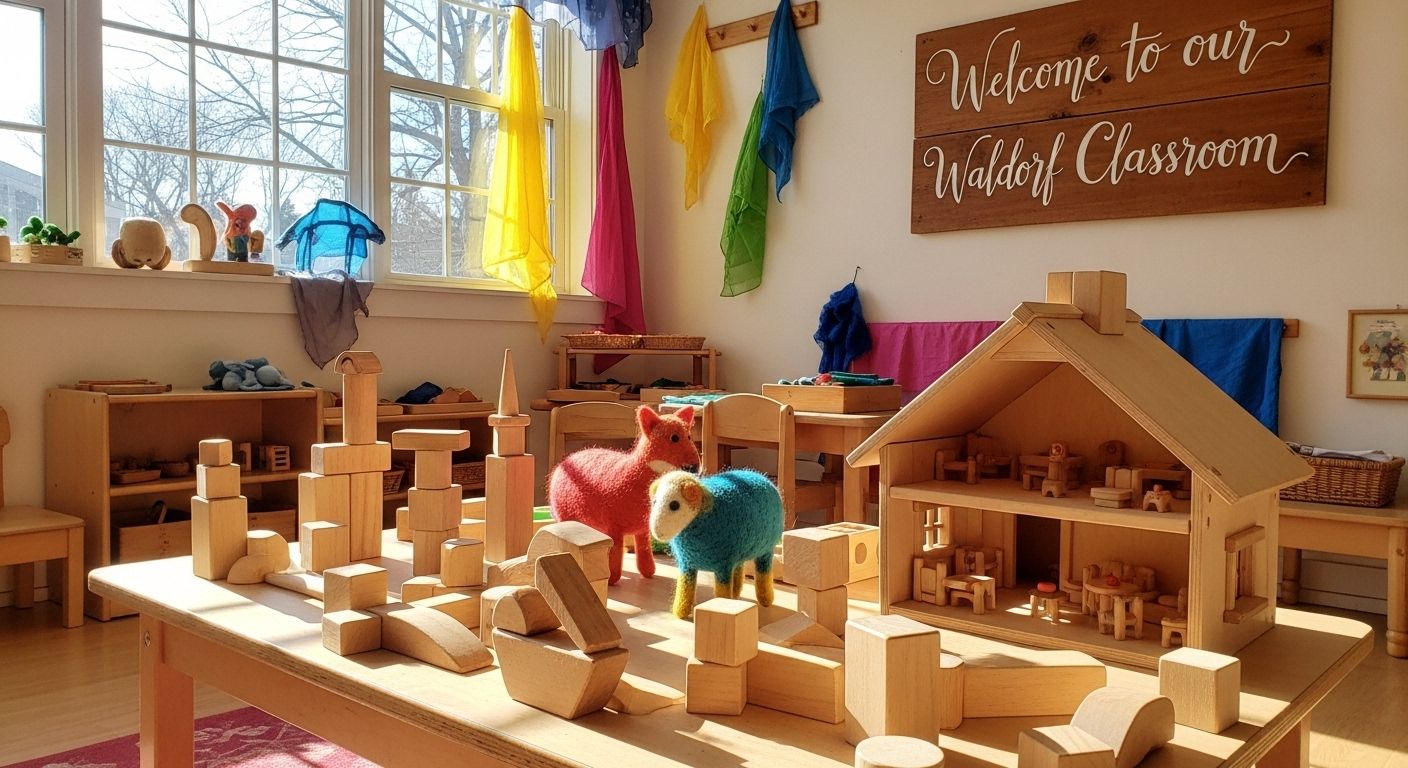
Okay, real talk—people mix up waldorf education toys and Montessori toys all the time. Both love nature, both hate plastic overload, but their vibes? Totally different. Montessori’s all about *purpose*: each toy teaches a specific skill—pouring, sorting, matching. Precision matters. Waldorf? It’s all about *possibility*. A Montessori knob puzzle has one right answer; a Waldorf cloth playscape has infinite stories. One’s structured learning; the other’s poetic wandering. And hey, that’s cool! You don’t gotta pick sides—just know that if your kid’s building a fairy village with acorns and yarn, they’re probably vibin’ Waldorf-style. Both rock, but waldorf education toys prioritize soul over syllabus.
The 10 Toy Rule and How Waldorf Aligns Perfectly
Heard of the “10 toy rule”? It’s this minimalist parenting hack where you limit your kid to just ten toys at a time. Sounds wild, but hear us out—less clutter = more focus. And guess what? waldorf education toys were basically born for this. Since they’re open-ended, one wooden arch can replace ten single-use plastic toys. A set of nesting bowls? Kitchen, drum, hat, nest—all in one. Families who adopt the 10 toy rule often find themselves naturally drawn to waldorf education toys because they *do more with less*. Plus, rotating toys becomes easy: swap out the silk scarf for a set of counting stones, and boom—new adventure, zero Amazon cart.
Pricing & Value: Are Waldorf Toys Worth the Splurge?
Let’s be real—waldorf education toys ain’t cheap. A hand-carved wooden horse might run you $45–$85 USD, and a proper set of Grimm’s rainbows? Easily $120+. But here’s the kicker: these toys last. Like, *grandkid*-last. Compare that to a $20 electronic toy that dies in six months (batteries not included, obvi), and suddenly that $75 wooden train looks like a steal. Plus, many waldorf education toys are heirloom-quality, ethically made, and support small artisans. You’re not just buying a toy—you’re investing in slow childhood, sustainability, and sanity. And honestly? Watching your toddler cradle a handmade doll like it’s sacred? Priceless.
Top Brands Crafting Authentic Waldorf Education Toys
Not all “natural” toys are true waldorf education toys. Look for brands that stick to the ethos: no plastic, no batteries, no mass-produced junk. Heavy hitters include **Grimm’s** (Germany), **Ostheimer** (those dreamy wooden animals), **Sarah’s Silks** (for flowy play cloths), and **Nova Natural** (US-based, family-run). These folks don’t just slap “Waldorf-inspired” on a label—they live it. Their toys are tested by real kids, finished with non-toxic oils, and often made in small batches. When you buy from them, you’re supporting craftsmanship over consumerism. And that’s the whole spirit of waldorf education toys, baby.
Where to Start Your Waldorf Toy Journey
Feelin’ overwhelmed? Start small. Grab a set of wooden blocks, a silk scarf, and a simple doll—that’s your starter pack. Dive deeper by exploring The Green Bean Goods for curated picks, browse the Educational category for age-aligned suggestions, or check out our deep dive on evolving play needs in Learning Toys for 7-Year-Olds: Hot Trends. Remember, waldorf education toys aren’t about perfection—they’re about presence. Let your kid lead. Watch what they gravitate toward. Maybe they turn a log slice into a spaceship. Maybe they wrap a doll in leaves like a forest queen. That’s the beauty. You don’t need a manual—just trust the quiet magic of waldorf education toys.
Frequently Asked Questions
What is the Waldorf approach to toys?
The Waldorf approach to waldorf education toys emphasizes natural materials, simplicity, and open-ended play to nurture imagination, sensory development, and emotional growth. Toys are intentionally minimal—often faceless, unbranded, and free of electronics—to encourage children to project their own stories and feelings onto them, fostering creativity rather than passive consumption.
What is the difference between Waldorf and Montessori toys?
While both waldorf education toys and Montessori toys favor natural materials, Waldorf toys prioritize imaginative, unstructured play with abstract forms, whereas Montessori toys are purpose-driven, designed to teach specific skills like sorting or fine motor control. Waldorf is poetic and fluid; Montessori is precise and practical—but both reject plastic overload and screen dependence.
What is the 10 toy rule?
The 10 toy rule is a minimalist parenting strategy that limits a child’s accessible toys to just ten at a time to reduce clutter and increase meaningful play. Waldorf education toys align perfectly with this rule because their open-ended design allows one toy to serve multiple imaginative purposes, making fewer items feel abundant and engaging.
What exactly are Waldorf dolls?
Waldorf dolls are soft, handmade dolls typically made from organic cotton and stuffed with wool, featuring minimal or no facial features to allow children to imagine their own emotions and stories. As core examples of waldorf education toys, they promote empathy, calm play, and emotional projection without imposing fixed identities or commercial aesthetics.
References
- https://www.waldorfearlychildhood.org/page/toys
- https://www.ostheimer.de/en/philosophy
- https://www.grimms-spielundholz.com/pages/our-philosophy
- https://www.sarahssilks.com/blogs/news/why-waldorf-toys