Learning Toys for 11-Year-Olds: Breakthrough
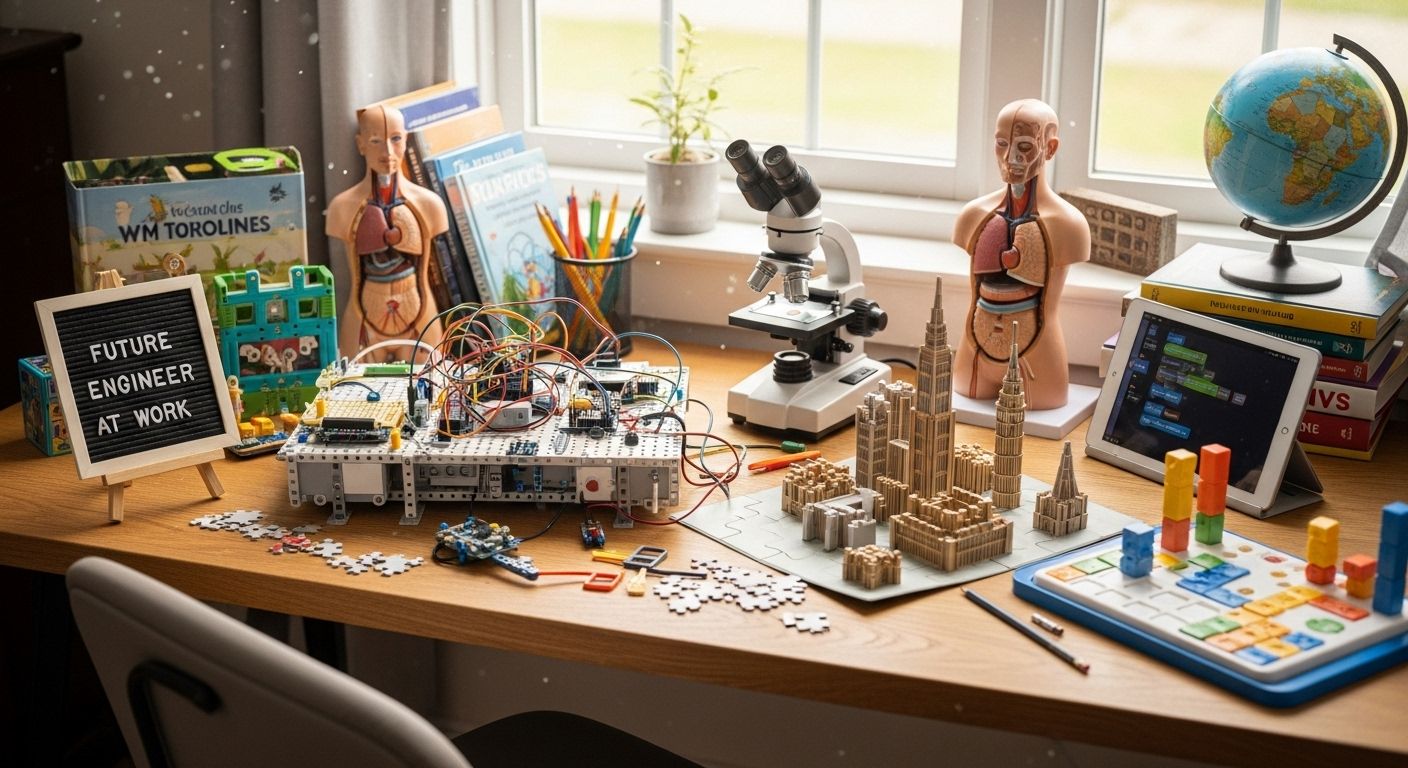
- 1.
Ever seen an 11-year-old try to explain quantum entanglement using LEGOs, a flashlight, and a very confused hamster? Yeah. That ain’t weird—that’s *wonder* wearin’ cargo shorts.
- 2.
What should an 11 year old play? Hint: It’s not “quiet time” (unless they’re coding in stealth mode)
- 3.
What toys should a 10 year old play with? Let’s peek *ahead*—because 10’s just 11 in training wheels
- 4.
What to get a 10 year old? Same answer. Just add *more voltage*.
- 5.
What are the best STEM toys for 11 year old boys? Let’s drop the gender lens and zoom in on *minds*
- 6.
“But will it survive the science fair *and* my kid’s third redesign?” — Durability, redefined
- 7.
The screen sweet spot: Not *anti*-digital—but *pro*-purpose
- 8.
Collaboration > Competition: Why the best learning toys for 11 year olds come in *teams*
- 9.
The “Grandma Test”: If she can’t understand *why* it’s cool, you’re on the right track
- 10.
Where to start your 11-year-old’s genius journey? Right here, y’all.
Table of Contents
learning toys for 11 year olds
Ever seen an 11-year-old try to explain quantum entanglement using LEGOs, a flashlight, and a very confused hamster? Yeah. That ain’t weird—that’s *wonder* wearin’ cargo shorts.
“So… if Schrödinger’s cat had WiFi, would it still be both dead *and* buffering?” Bless. At eleven, kids aren’t just askin’ “why”—they’re demandin’ *proof*, sketchin’ schematics on napkins, and occasionally building a potato-powered alarm clock just to spite the snooze button. A real-deal set of learning toys for 11 year olds doesn’t *teach*—it *provokes*. It whispers, *“Go ahead. Break it. Fix it. Then make it sing.”* This is the age where curiosity gets a driver’s permit—and we *better* hand ‘em a vehicle with decent brakes *and* a turbo button.
What should an 11 year old play? Hint: It’s not “quiet time” (unless they’re coding in stealth mode)
“Play” at 11 looks less like hopscotch and more like *hypothesis-testing with snacks*. Think:
- Engineering a Rube Goldberg machine to feed the dog (and filming it in slo-mo)
- Debating whether a robot vacuum has *intent* (spoiler: it does, and it’s passive-aggressive)
- Running a mock trial for “The Case of the Missing Cookie”—with evidence logs and cross-examination
The magic? It’s all *self-directed*, but scaffolded. A top-tier learning toys for 11 year olds kit doesn’t hold their hand—it hands ‘em a wrench, a datasheet, and says, *“Y’all got this.”*
What toys should a 10 year old play with? Let’s peek *ahead*—because 10’s just 11 in training wheels
Here’s the thing: ten-year-olds *think* they’re grown. Eleven-year-olds *know* they’re not—but they’re dang close. So the best learning toys for 11 year olds often overlap with late-10 kits—just *deeper*, *faster*, and *less forgiving*. Look for progression:
The “Level-Up” Principle in learning toys for 11 year olds
A coding bot that goes from block-based → Python? Check. A chemistry set that swaps baking soda volcanoes for titration and pH mapping? Double-check. A drone kit where they *solder the motors*, not just snap ‘em in? Now we’re talkin’. The gap between 10 and 11 ain’t about age—it’s about *autonomy*. Give ‘em tools that trust ‘em to fail *productively*.
What to get a 10 year old? Same answer. Just add *more voltage*.
If you’re shoppin’ for a soon-to-be-11, aim for *stretch*—not safety. A 10-year-old ready for learning toys for 11 year olds thrives on:
- Real tools (soldering irons with temp control, multimeters, calipers)
- Open APIs (robots they can command via Python script—not just an app)
- Moddable hardware (3D-printable parts, Arduino-compatible sensors)
And no—*they don’t need supervision for every step*. They need *clear safety boundaries* and *freedom within ‘em*. Trust + structure = innovation incubator.
What are the best STEM toys for 11 year old boys? Let’s drop the gender lens and zoom in on *minds*
Real talk: the *best* learning toys for 11 year olds don’t care about chromosomes—they care about *curiosity type*. Is your kid obsessed with flight? Fluid dynamics? Cryptography? *That’s* your filter. But since y’all asked (and Amazon keeps pushin’ “boys = robots”), here’s what’s actually *working* in homes and labs alike:
| Toy | Core Discipline | Why 11-Year-Olds Geek Out | Price (USD) |
|---|---|---|---|
| LEGO Education SPIKE Prime | Robotics + Data Logging | Program in Scratch *or* Python; sensors feed real-time graphs to tablet | $329 |
| littleBits Synth Kit + CloudBit | Electronics + Music Tech | Build analog synths, then control ‘em via web dashboard—hello, bedroom DJ | $199 |
| Thames & Kosmos Physics Workshop | Mechanics + Engineering | 62 models—from gear trains to centrifugal governors—with *actual formulas* | $119 |
| Osmo Genius Kit + Coding Family Bundle | Logic + Spatial Reasoning | Turn iPad into AR workspace—tiles become code, maps, even DNA strands | $129 |
Notice the pattern? Every one *invites iteration*. No “finished.” Just *“What if…?”*
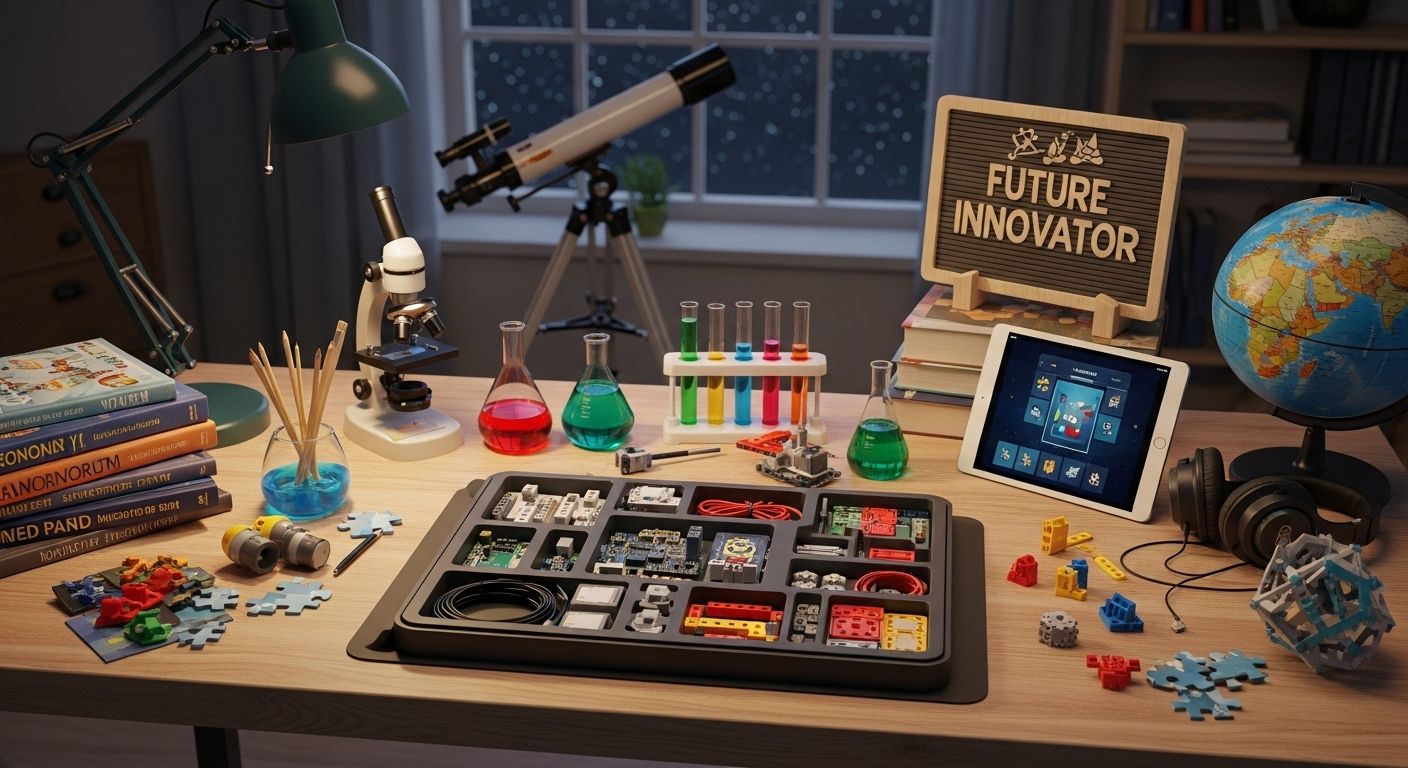
“But will it survive the science fair *and* my kid’s third redesign?” — Durability, redefined
A toy that breaks after Build #2 ain’t a learning toys for 11 year olds candidate—it’s a *frustration delivery system*. We demand:
- Replaceable parts (not “contact support for a $45 motor”)
- Tool-free disassembly (because tweezers shouldn’t be required for joy)
- Documentation that assumes intelligence—not condescension (“Step 1: Breathe. Step 2: You got this.”)
The screen sweet spot: Not *anti*-digital—but *pro*-purpose
Let’s kill the myth: *screens aren’t the enemy*. Passive consumption is. The best learning toys for 11 year olds use tech as a *lever*:
“My kid built a weather station, logged data for 3 weeks, then made a scatter plot that proved our backyard is 2.3°F hotter than the neighbor’s. We’re now in a friendly turf-war over mulch.” — Dad in Austin, TXLook for toys that:
- Export data to CSV (yes, *CSV*—they’ll learn Excel or Python soon enough)
- Allow custom firmware uploads (hello, GitHub repo in 6th grade)
- Integrate with real-world APIs (NASA, NOAA, Wolfram Alpha—not just “fun facts”)
Collaboration > Competition: Why the best learning toys for 11 year olds come in *teams*
Eleven-year-olds crave *peer validation*—but not the TikTok kind. The *“Whoa—you made it *hover*? Show me the code!”* kind. Top kits encourage:
- Co-building (shared chassis, split subsystems)
- Peer review (“Test my bridge—try to break it fairly”)
- Documentation swaps (write build logs, then trade & debug)
A learning toys for 11 year olds set that only works solo? Missed opportunity. The future’s collaborative—and messy—and *loud*. Lean in.
The “Grandma Test”: If she can’t understand *why* it’s cool, you’re on the right track
Real innovation looks like chaos to outsiders. A half-soldered circuit board. A notebook full of crossed-out equations. A robot that walks… sideways. That’s the *good stuff*. The best learning toys for 11 year olds produce artifacts that *resist* tidy Instagram posts—because the learning’s in the *process*, not the product. Pro metric:
Time spent *modifying* the instructions > time spent following them.If they’re not “breaking” the kit (safely!), it’s too simple.
Where to start your 11-year-old’s genius journey? Right here, y’all.
You’re not just buying a toy—you’re funding a *phase of wonder*. And we’re here for it. Kick things off at the source: The Green Bean Goods. Drill down into our rigorously tested picks at Educational. And if your kid’s still 8 but *thinking* like 11? Don’t miss our viral deep-dive: best educational gifts for 8 year olds exposed—where we reveal why “age range” is just a suggestion.
Frequently Asked Questions
What should an 11 year old play?
An 11-year-old thrives on learning toys for 11 year olds that blend creation, critique, and iteration—think programmable robotics, open-ended engineering kits, logic-driven board games (like *Catan Junior* → *Terraforming Mars*), and narrative-based science labs. Key sign they’re engaged? They’re *arguing* about design choices—not just following steps.
What toys should a 10 year old play with?
For a 10-year-old ready to level up, prioritize learning toys for 11 year olds with *scaffolded complexity*: kits that start guided (Snap Circuits) but allow open expansion (Arduino add-ons), or coding platforms that shift from blocks to text (Scratch → MakeCode → Python). Avoid “one-and-done” builds. Look for modular systems—where today’s rover becomes next month’s Mars base.
What are the best STEM toys for 11 year old boys?
Forget gender—focus on *interest*. That said, top performers for kids drawn to mechanics, code, or systems include: LEGO SPIKE Prime (robotics + data), littleBits Synth Kit (electronics + creativity), and Thames & Kosmos Physics Workshop (real engineering math). The best learning toys for 11 year olds let them *own* the build—and the bugs.
What to get a 10 year old?
Give ‘em a learning toys for 11 year olds kit *with training wheels removed*—i.e., minimal hand-holding, maximal tinkering room. Favorites: Osmo Genius + Coding Family Bundle (for visual thinkers), MEL Science VR Chemistry (for hands-on experimenters), or Sphero RVR+ (for coders who want wheels). Bonus if it includes *community access*—forums, build galleries, live Q&As. Genius grows in soil, not vacuum.
References
- https://www.apa.org/topics/child-development/early-adolescence
- https://www.nsta.org/science-and-children/science-and-children-januaryfebruary-2023/stem-toys-early-adolescence
- https://www.ncbi.nlm.nih.gov/pmc/articles/PMC7986562
- https://www.edutopia.org/article/why-middle-school-stem-matters