Talking Flash Cards: Magic Boosters
- 1.
What Even Are Talking Flash Cards, Y’all?
- 2.
Why Do Educators Keep Whisperin’ About Talking Flash Cards?
- 3.
Can Grown-Ups Use Talking Flash Cards Too, or Is This Just Kid Stuff?
- 4.
How Do You Spot a Quality Set of Talking Flash Cards in the Wild?
- 5.
Wait—Can I Make My Own Talking Flash Cards at Home?
- 6.
What’s the Deal With Small Talk and Deep Questions on Talking Flash Cards?
- 7.
Are Talking Flash Cards Worth the Cash, Though?
- 8.
How Do Talking Flash Cards Fit Into Modern Teaching Trends?
- 9.
Do Talking Flash Cards Actually Help With Long-Term Memory?
- 10.
Where Can You Grab the Best Talking Flash Cards Without Gettin’ Scammed?
Table of Contents
talking flash cards
What Even Are Talking Flash Cards, Y’all?
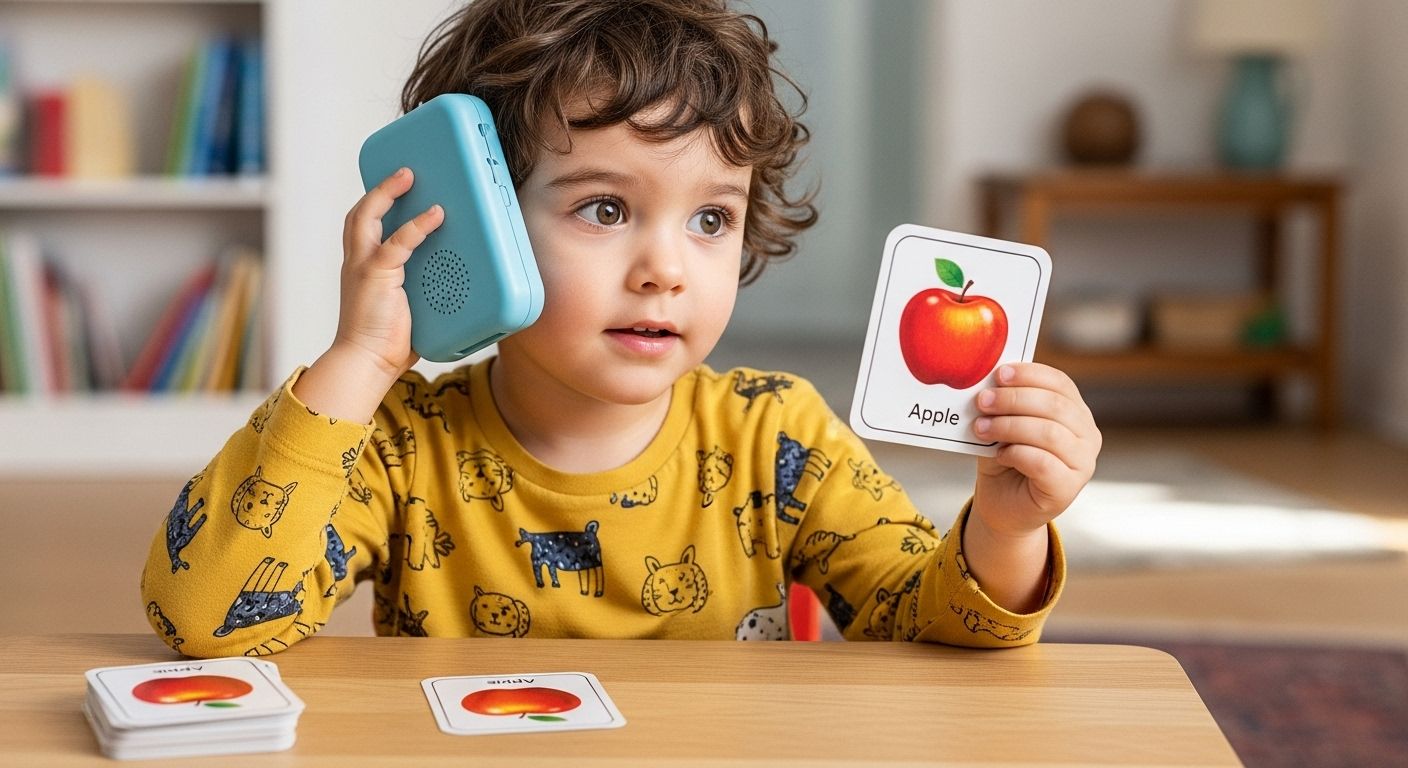
Ever caught yourself talkin’ to a stack of cards like they’re your therapist? Nah, you ain’t losin’ it—those might just be talking flash cards. These lil’ wonders are basically flash cards with a voice. Literally. They’ve got built-in speakers or QR codes that link to audio clips, so when you flip ‘em, boom—you hear a word, a phrase, maybe even a full-blown sentence. Perfect for toddlers who think “apple” is just a shiny red thing and not a vocab builder. Talking flash cards blend tactile learning with auditory cues, makin’ ‘em a triple threat in early ed. And hey, if you’re teachin’ a second language or preppin’ for a spelling bee, these bad boys? Total game-changers.
Why Do Educators Keep Whisperin’ About Talking Flash Cards?
‘Cause they work, honey. Teachers from Brooklyn to Boise swear by talking flash cards for keepin’ short attention spans locked in. Unlike static cards that just sit there lookin’ pretty, talking flash cards engage multiple senses—sight, sound, touch—which boosts retention big time. Studies (yeah, the nerdy kind) show kids remember up to 70% more when they hear *and* see info together. That’s not magic—that’s neuroscience wearin’ sneakers. Plus, let’s be real: when a card says “woof!” instead of just showin’ a dog, even the grumpiest kindergartener cracks a smile. And smiles? They’re the secret sauce of learning.
Can Grown-Ups Use Talking Flash Cards Too, or Is This Just Kid Stuff?
Hold up—why we always actin’ like learning stops at 18? Newsflash: talking flash cards ain’t just for rugrats. Language learners, neurodivergent adults, even corporate trainers use ‘em to drill vocab, practice pronunciation, or prep for presentations. Imagine flashin’ a card that says “synergy” and actually hears how it’s supposed to sound in a boardroom. No more embarrassin’ yourself in front of the CEO. And for folks with dyslexia or ADHD? Talking flash cards offer a low-pressure, repeatable way to absorb info without feelin’ overwhelmed. So yeah, grown-ups—grab those cards. Your brain’ll thank ya.
How Do You Spot a Quality Set of Talking Flash Cards in the Wild?
Not all talking flash cards are created equal, y’all. Some sound like they were recorded through a tin can in a wind tunnel. Others? Crystal clear, warm, and paced just right. Look for sets with native-speaker audio, durable materials (think thick cardboard or laminated edges), and intuitive tech—no one wants to wrestle with Bluetooth just to learn “banana.” Also, check if the content’s aligned with curriculum standards or language frameworks. Bonus points if they’re eco-friendly or come with a lil’ storage box. ‘Cause nobody likes losin’ half their deck under the couch like loose change.
Wait—Can I Make My Own Talking Flash Cards at Home?
Absolutely! DIY talking flash cards are easier than bakin’ banana bread (and way less messy). All you need is blank index cards, a smartphone, and a free app like QR Voice or Speakly. Record your audio, generate a QR code, slap it on the card, and bam—you got custom talking flash cards tailored to your kid’s obsession with dinosaurs or your Spanish verb conjugations. Pro tip: laminate ‘em if you plan on usin’ ‘em more than twice. Coffee spills wait for no one. And hey, if you’re crafty, throw on some doodles or stickers—makes ‘em feel less like homework and more like treasure. 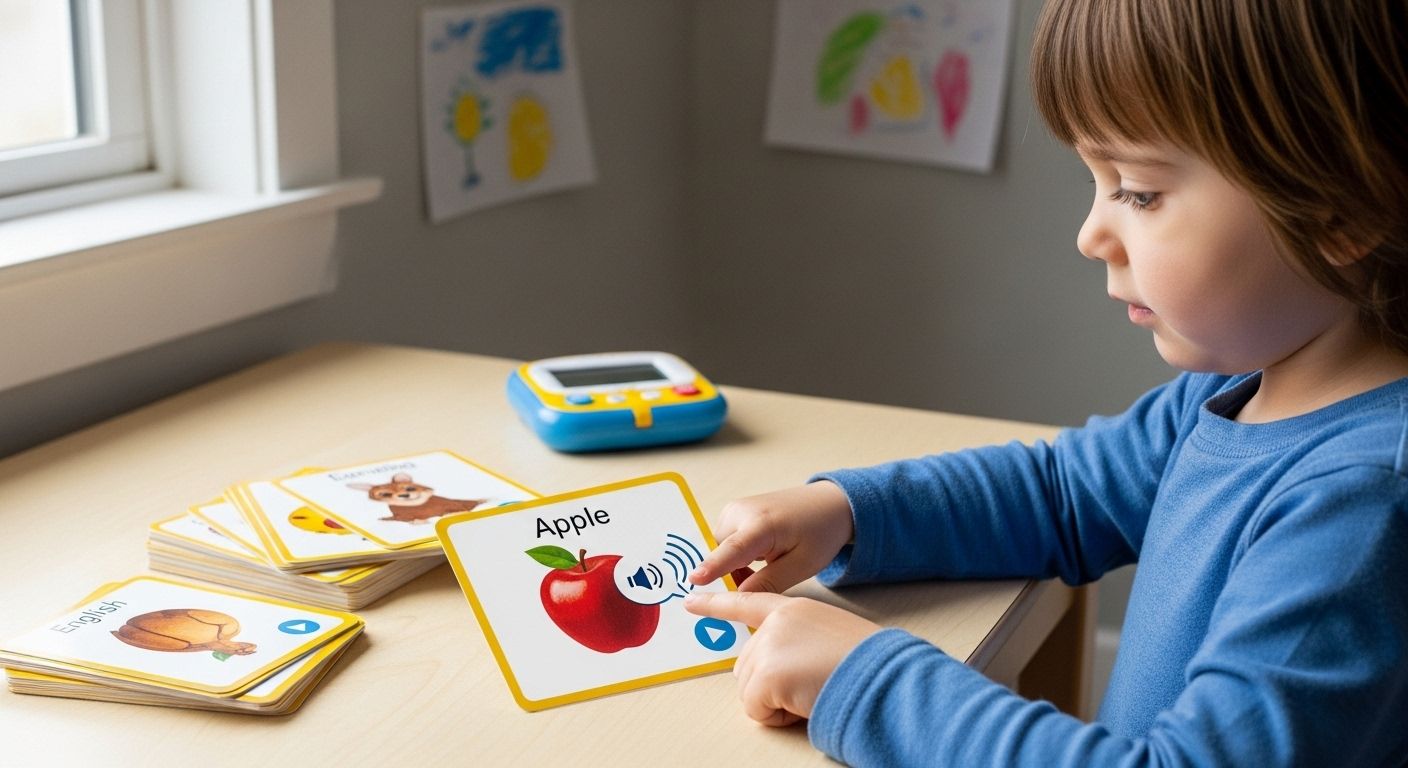
What’s the Deal With Small Talk and Deep Questions on Talking Flash Cards?
Here’s where talking flash cards get spicy. Beyond ABCs and 123s, some decks are packed with conversation starters—like “What’s your spirit animal?” or “If you could teleport anywhere, where’d you go?” These aren’t just icebreakers; they’re empathy builders. For shy kids or ESL students, having a card ask the question takes the pressure off. And for families? Dinner table convos just got 10x more interesting. Ever heard your 8-year-old say, “Mom, what’s something you failed at but learned from?” Yeah, that’s the power of talking flash cards—turnin’ small talk into soul talk.
Are Talking Flash Cards Worth the Cash, Though?
Let’s talk turkey. A solid set of talking flash cards runs you between $15–$40 USD. Sounds steep ‘til you realize it’s cheaper than a month of tutoring—and way more reusable. Think of it as an investment in curiosity. Plus, many brands offer digital add-ons or refill packs, so you ain’t stuck with the same 50 words forever. Compare that to apps that nickel-and-dime you for every new module, and suddenly talking flash cards look like a steal. And if you go the DIY route? Pennies on the dollar. Your wallet *and* your brain win.
How Do Talking Flash Cards Fit Into Modern Teaching Trends?
They’re like the lovechild of Montessori and tech—hands-on, screen-light, but still smart. In a world drownin’ in tablets and YouTube Kids, talking flash cards offer a tactile alternative that doesn’t fry little eyeballs. Teachers love ‘em ‘cause they support differentiated instruction: fast learners move ahead, strugglers replay audio ‘til it clicks. And with schools pushin’ social-emotional learning (SEL), decks with emotion cards (“Show me how ‘frustrated’ looks”) help kids name feelings before they melt down. Bottom line? Talking flash cards aren’t retro—they’re *resiliently relevant*.
Do Talking Flash Cards Actually Help With Long-Term Memory?
Science says yes—and here’s why. The combo of visual + auditory input creates what’s called “dual coding,” which strengthens neural pathways. One study found kids using talking flash cards retained vocabulary 40% better after two weeks compared to silent cards. Another showed improved pronunciation accuracy in language learners by 62%. That’s not fluke—that’s consistent, repeatable results. And ‘cause you can shuffle, repeat, and isolate tricky cards, talking flash cards naturally support spaced repetition, the gold standard of memorization. So yeah, they’re not just fun—they’re *strategically brilliant*.
Where Can You Grab the Best Talking Flash Cards Without Gettin’ Scammed?
Stick to trusted spots, friends. Skip the sketchy Amazon third-party sellers with zero reviews. Instead, head straight to The Green Bean Goods for thoughtfully designed, child-safe sets. Or browse curated picks in the Educational section if you’re huntin’ by theme. And if you’re into holistic learning, don’t sleep on the Waldorf Education Toys Natural Wonders collection—it pairs beautifully with talking flash cards for a full sensory experience. Pro move: sign up for newsletters. They often drop early access or bundle deals that’ll make your inner frugal parent do a happy dance.
Frequently Asked Questions
What are talking cards?
Talking cards—often called talking flash cards—are educational tools that combine printed visuals with audio playback. They may use embedded speakers, QR codes, or NFC chips to deliver spoken words, phrases, or questions, making them ideal for language development, literacy, and interactive learning across ages.
What are 10 deep questions?
Deep questions on talking flash cards might include: “What does kindness sound like?” “When did you last feel proud of yourself?” or “If you could change one rule in the world, what would it be?” These prompts encourage reflection, emotional intelligence, and meaningful dialogue—key ingredients in social-emotional growth supported by talking flash cards.
How to make a speaking card?
To make your own talking flash cards, record audio via a free app (like QR Voice), generate a scannable QR code, and stick it onto a sturdy index card. Add illustrations or keywords for context. Laminate for durability, and voilà—you’ve got personalized, budget-friendly talking flash cards ready for home or classroom use.
What are 100 great small talk questions?
Decks of talking flash cards often include lighthearted prompts like “What’s your favorite smell?” or “Would you rather fly or be invisible?” These 100+ small talk questions—delivered audibly via talking flash cards—help break the ice, build confidence in shy speakers, and spark organic conversations in classrooms, therapy sessions, or family game nights.
References
- https://www.edutopia.org/article/multisensory-learning-strategies
- https://www.ncbi.nlm.nih.gov/pmc/articles/PMC6101893/
- https://www.apa.org/topics/learning-memory/spaced-repetition
- https://www.readingrockets.org/topics/phonological-awareness